Some backyard sheds in Renton start sagging after just a couple of winters because of what happens underneath the structure. Between the heavy Pacific Northwest rainfall and the stubborn clay-heavy soil found in neighborhoods from the Renton Highlands down to Fairwood, ground movement can wreck a poorly prepared base in a very short time.
Property owners must understand how to get the shed foundation right before starting any construction work.
Before You Dig: Understanding Your Renton Plot
You cannot simply place a shed anywhere on your property and hope for the best results. Water tends to pool in our yards during the wetter months, and clay soil swells when it is soaked, then shrinks when it dries out. That shifting cycle causes uneven settling.
Before buying materials, check your local rules. In Renton, unattached structures under 200 square feet usually do not need a building permit, but you still have to respect property setbacks. Walk your yard during a heavy rainstorm to see where the water naturally runs. If your chosen spot is sitting in a puddle, you need to redirect that water before building anything.
What You Can Realistically DIY
If you are handy and have a weekend to spare, building a crushed gravel pad or setting pre-cast concrete pier blocks is a great DIY project. Here is what you can tackle yourself:
- Clearing topsoil and organic matter from the footprint
- Digging down a few inches and laying down heavy-duty weed barrier fabric
- Building a sturdy timber frame using pressure-treated 4x4s or 6x6s
- Hauling and compacting crushed rock or gravel for a clean, fast-draining pad
A simple gravel pad works very well because it lets water drain straight through instead of pooling against your floor joists. Custom Sheds of Renton sees plenty of homeowners successfully knock out gravel bases over a Saturday afternoon.
When to Hand the Job to a Pro
While gravel and blocks are DIY-friendly, certain site conditions mean you should call in local contractors. Steep slopes are a prime example. If your backyard drops off, building a multi-tiered or stepped foundation requires precise engineering so the structure does not slide.
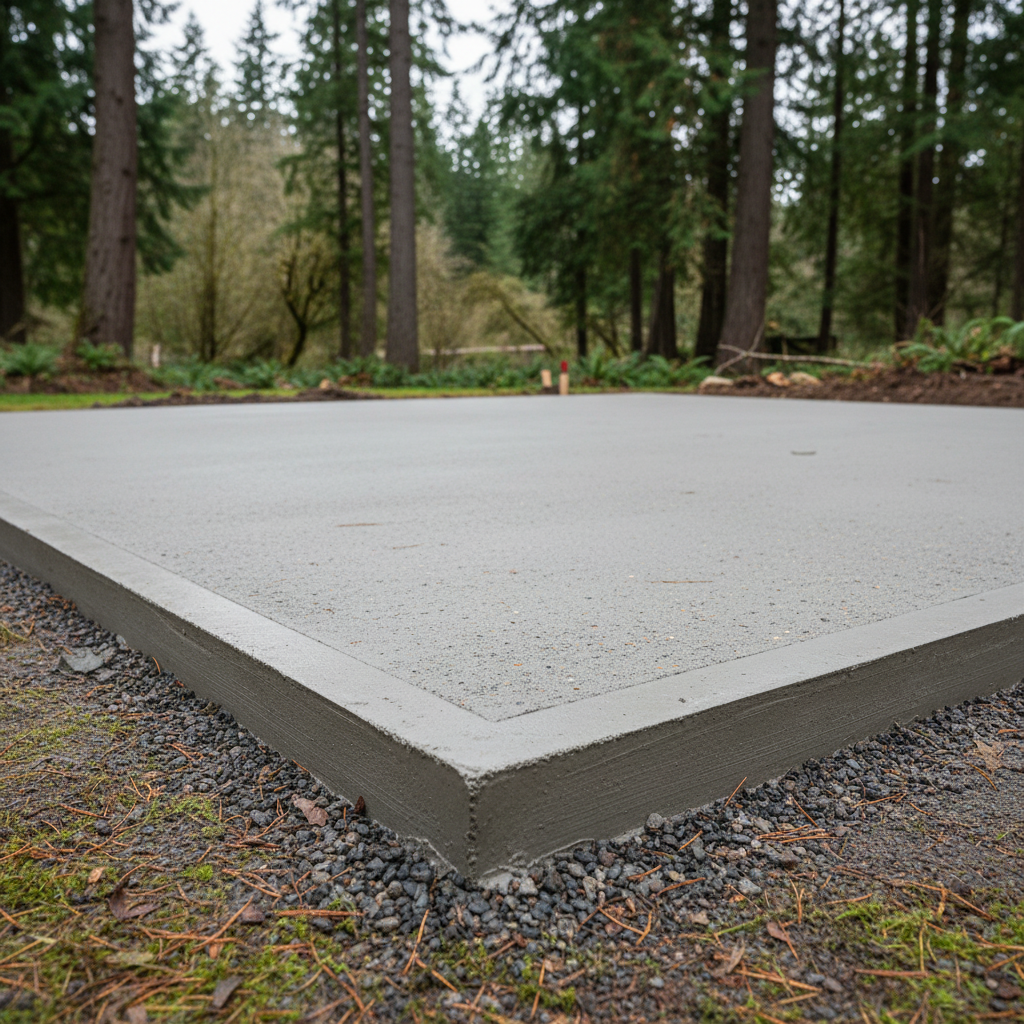
You should also call a professional if you are planning a thick poured concrete slab. Pouring concrete requires precise leveling, forms, and rebar reinforcement to handle expansive local soils, and once that truck shows up, you are on a strict clock. Getting a concrete pour wrong is an expensive mistake that is nearly impossible to fix later.
After the Foundation: Protecting Your Investment
Once your base is set and your shed is up, do not just walk away. Keep an eye on the perimeter drainage. Make sure roof run-off from your gutters is not splashing directly onto the base or eroding the gravel edge. Taking these steps early on ensures your outbuilding stays square, dry, and rock-solid for 15 to 20 years or more.