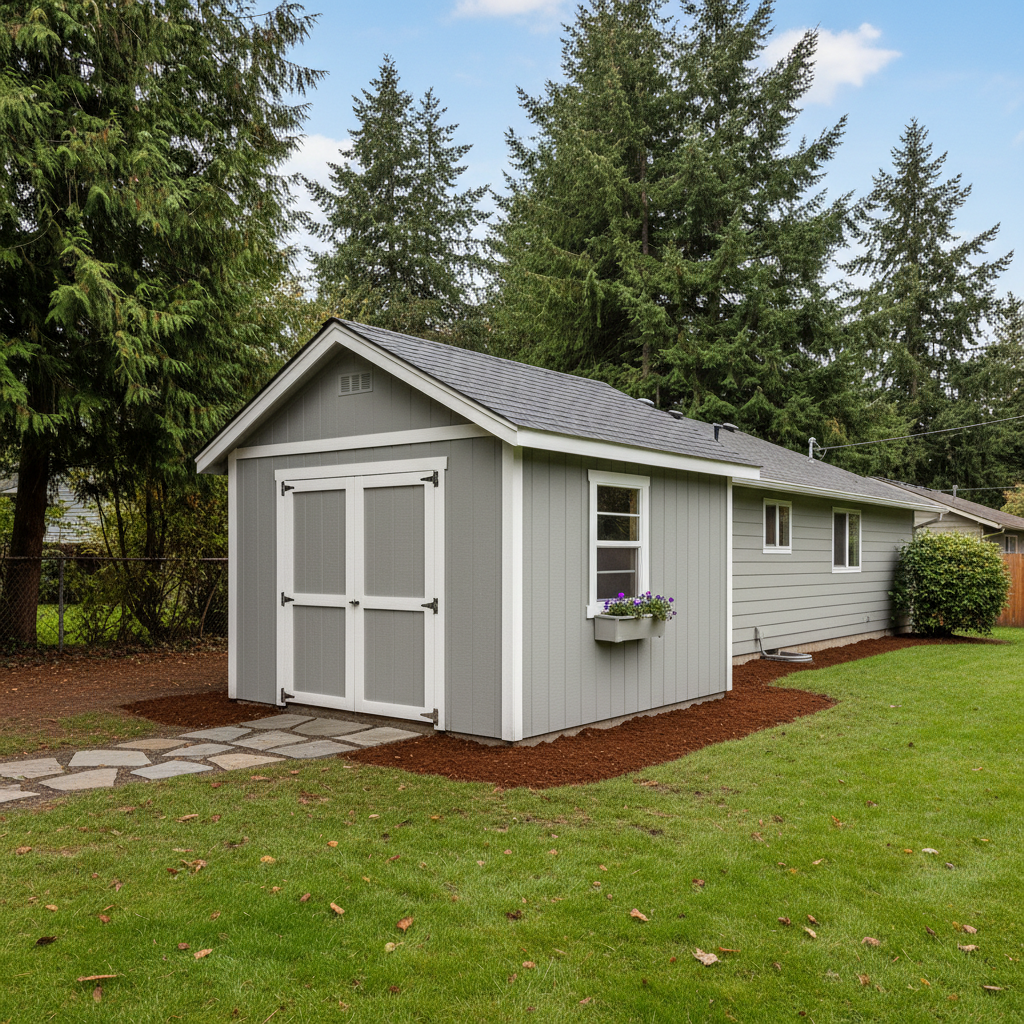
Alright, let's talk sheds and Renton weather. You've got a shed, or you're thinking about one. That's great. But here in Western Washington, it's not just about getting it built; it's about keeping it standing and working well through our famously damp, sometimes wild, climate. I've seen a lot of sheds over the years, and I can tell you, a little foresight goes a long way.
When's the Best Time to Build or Maintain?
Everyone asks me, "When's the ideal time to get a shed built?" Honestly, if you're looking for new construction, late spring through early fall is your sweet spot. Why? Less rain, more consistent temperatures. That means better conditions for pouring concrete foundations, framing, and getting the exterior sealed up properly. Wood likes to be dry when it's being cut and fastened, and finishes cure best without a constant drizzle.
That said, don't wait until August to start planning. Good builders, like us at Custom Sheds of Renton, get booked up pretty fast. If you want your shed ready for fall storage, you really should be talking to us in late winter or early spring. Get on the schedule, get your permits sorted, and then when that dry spell hits, we're ready to roll.
For maintenance, though, you've got a bit more flexibility. I'd say early fall, right after the summer heat breaks but before the real deluges start, is perfect for a thorough inspection. Then again in late spring, after the worst of winter is over, to check for any damage.
Understanding Our Local Weather & Your Shed
You know what we're up against here. It's not just the rain; it's the constant dampness, the moss, the wind, and those occasional heavy snowfalls that surprise everyone. This isn't Eastern Washington where things just dry out. Here, moisture is the enemy of wood, and it's always looking for a way in.
- Rain & Dampness: This is the big one. Our long, wet winters mean your shed's exterior is constantly under attack. Good siding, proper flashing, and a solid roof are non-negotiable. If water gets in, you're looking at rot, mold, and a compromised structure.
- Moss & Algae: Everything green loves our climate. Your roof, siding, and even the concrete foundation can become a moss farm. This isn't just about how it looks; moss holds moisture against surfaces, which speeds up decay.
- Wind: We get some decent gusts, especially during those fall and winter storms. If your shed isn't anchored properly, or if your roof shingles aren't well-secured, you could be in for trouble.
- Soil & Drainage: Around here, especially in some of the older neighborhoods with clay soil, drainage is critical. You don't want water pooling around your shed's foundation. It'll undermine it and lead to moisture problems inside.
Protecting Your Investment Year-Round
So, what can you do to keep your shed in top shape? A lot, actually. It's not rocket science, but it does take a little attention.
Spring Cleaning & Inspection (April-May)
Once the worst of the winter rains are behind us, give your shed a good once-over.
- Clear Debris: Get all the leaves, twigs, and gunk off the roof. Check your gutters if you have them – they should be clear and draining freely.
- Look for Leaks: Go inside. Any water stains on the ceiling or walls? That's a red flag. Trace it back to the source on the outside.
- Check the Exterior: Look at your siding. Any cracks, peeling paint, or loose boards? Seal up any gaps you find. Check the trim around windows and doors.
- Foundation Check: Make sure water isn't pooling around the base. If it is, you might need to improve drainage or add some gravel.
Summer Maintenance (June-August)
This is your best window for bigger projects.
- Repairs: If you found any issues in spring, fix them now while it's dry. Replace damaged siding, re-caulk, or paint.
- Seal & Protect: If your shed is wood, consider re-staining or painting every few years. This is your shed's first line of defense against moisture.
- Ventilation: Make sure your shed has good airflow. If it feels stuffy or smells damp, you might need more vents to prevent condensation and mold.
Fall Prep (September-October)
Get ready for the wet season.
- Clean Again: Clear the roof and gutters one last time before the leaves really start falling.
- Trim Trees: Cut back any branches that are overhanging your shed. They can drop debris, scratch the roof, and even fall on it during a storm.
- Secure Doors & Windows: Make sure everything latches tightly. You don't want wind and rain getting in.
Winter Watch (November-March)
Mostly, this is about monitoring.
- Snow Load: If we get a heavy snow, gently clear it off the roof if it's safe to do so. Our shed roofs are built to code, but an excessive load is never a good thing.
- Check for Damage: After any big wind storm, take a quick look around for loose shingles or siding.
- Keep it Tidy: Don't let things pile up against the shed walls outside. It traps moisture and can invite pests.
It's not a huge time commitment, but staying on top of these things will extend the life of your shed significantly. A well-maintained shed isn't just a place to store your stuff; it's an asset that adds value to your property. Take care of it, and it'll take care of you.